Roof Repair vs. Replacement: What It Costs to Decide Before Winter
Winter is coming, which means it's time to make a decision: Should you repair or replace your roof before winter? It's rarely an obvious call. A few missing shingles could mean a quick repair, or they could be the first sign of a roof that's finished. In Central Pennsylvania, the timing matters, because Altoona-area winters don't hand out second chances once freeze-thaw cycles start working on an opening. The roof repair vs replacement cost question really turns on two things: how bad the damage actually is, and how much life the roof has left before the season forces the issue.
Key Takeaways
- A repair is suitable when the damage is isolated and hasn't reached the deck or spread under the surface.
- Recurring leaks or widespread shingle wear point to a failing system, not a spot to patch.
- If your roof is nearing the end of its life, a repair will only extend it so long.
- Winter punishes an existing weak spot fast, so an unaddressed leak in October can be a much bigger bill by February.
- Only an on-site inspection can confirm what's really going on under your roof.
When Is a Repair Enough?
Plenty of damaged roofs don't need replacing. If the problem is contained to one spot and hasn't spread, a targeted repair can handle it without touching the rest of the roof. Some examples of repairable damage include:
A few missing or cracked shingles
A flashing failure around a chimney or vent
Penetration with no water staining showing up nearby
The catch is that what looks contained from the driveway can look very different once someone is up on your roof. Water travels, and it hides. A repair is the right call only after an inspection confirms the damage really stops where you can see it.
When Is It Time to Replace?
Some roofs are past patching, and the signs tend to show up in more than one place:
Recurring leaks: A leak that comes back after a repair, in the same spot or right next to it, means the system underneath has failed, not just the shingle on top. Paying for that repair twice usually costs more than replacing.
Widespread wear: Heavy granule loss across large areas, or curling and buckling in several spots, means the shingle surface is nearing the end of its life.
Soft decking: If the wood under the shingles feels spongy or sags underfoot, the damage has moved past the surface. No amount of shingle work fixes a deck that's already rotting.
Replacing pieces of a failing roof slows the decline; it doesn't stop it.
LIMITED TIME
6 MONTHS
NO INTEREST
NO PAYMENTS
Get Our BEST Financing Offer!
After the promo period, balances convert to a manageable 10-YEAR TERM at 10.99% FIXED APR.

How Old Is Your Roof?
Age might be the most overlooked part of this decision. Damage tells you what's wrong now. Age tells you how much a repair is actually worth.
A repair on a newer roof with one isolated problem makes sense.
That same repair on a roof near the end of its lifespan might buy you two or three years before the next failure.
You end up spending replacement money in pieces, on a roof that was going to need replacing anyway. If your roof is already in the back half of its life and showing damage, replacing it is usually the better long-term value, and the best time to replace a roof is often right before winter, not after.
Roof Repair vs. Replacement Cost
Roof repairs and replacements aren’t similar in price—at least not upfront. Here’s what each one runs, and what you get for your money.
Roof Repair
Angi's 2026 cost data puts the average roof repair around $1,175, with most jobs landing between $400 and $2,000. A major structural repair, the kind involving rotted decking or a widespread leak, can climb toward $8,000.
The appeal is simple: It's a fraction of a replacement, and it's fast. When the damage is isolated, and the rest of the roof is still sound, a repair is the smart move. The catch is that a repair only works when the roof underneath is healthy.
Roof Replacement
Angi puts a full replacement at about $9,600 on average, with most homeowners spending between $5,800 and $11,600. The size and material of your roof will move that number, and a large or premium roof can run well past it.
You pay more, but you get more. A new roof resets the clock and fixes every weak spot at once, not one by one. It also comes with long manufacturer warranties, often 25 to 50 years, that a patch job can't match. For a roof that's aging or failing in more than one place, that's usually the better long-term value.
Which One Actually Costs Less?
Up front, a repair wins every time. But that up-front number isn't the real comparison. A cheap repair on a roof near the end of its life just resets a short clock, and after two or three rounds of patching, you've spent real money and still need the replacement.
Here's the honest way to weigh roof repair vs replacement cost:
Repair path = (cost per repair x number of repairs) + the replacement you eventually need
Replace path = one replacement
On an aging roof, the repair path usually loses.
Patch three times at about $1,175, then replace, and you're looking at ($1,175 x 3) + $9,600 = roughly $13,100.
Replacing now runs $9,600. The repairs felt cheaper every single time, and still cost thousands more.
Why Winter Raises the Stakes
Damage that would sit quietly through a mild fall doesn't get that luxury in a Central Pennsylvania winter.
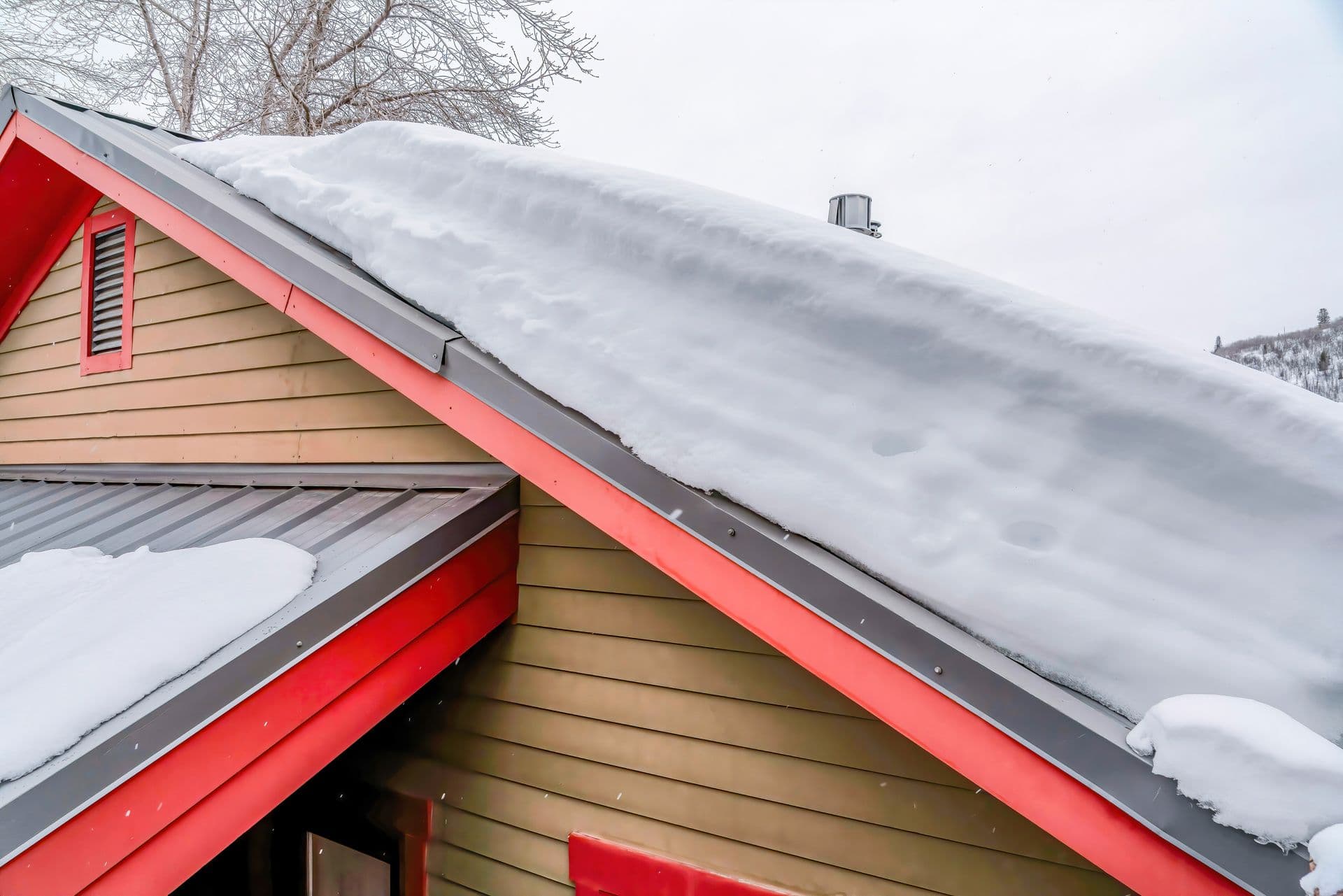
Water can find an opening in a cracked shingle or loose flashing, then freeze and expand, pushing that opening wider. The process can repeat during the next thaw, making the issue worse. A small vulnerability in October can be a real problem by February.
Ice dams are the biggest threat on a roof that's already worn. On a sound roof, they're mostly a nuisance, but on one with loose shingles or failing flashing, they push water straight into the weak spots, which is how ice dam roof damage turns an older or damaged roof into an interior repair. And a leak carried into winter doesn't hold still. It soaks the insulation and softens the decking underneath, and by spring, there can be mold in the attic. At that point, you're not just fixing the roof; you're fixing everything the water reached, which is why an unaddressed winter roof leak almost always costs more than handling the damage now.
If you end up needing a roof replacement, spring isn't your only window. Replacing a roof during a Pennsylvania winter is more doable than most homeowners expect, so there's little reason to nurse a failing roof until the weather warms up.
The Importance of a Roof Inspection
Here's the honest truth: No one can answer repair-or-replace from the driveway, a photo, or a checklist. What's visible on the surface rarely tells the whole story. Shingles can look rough over a deck that's perfectly solid, or look fine while hiding months of water damage underneath.
Your best bet is to contact a local roofing company like Solarshield for a roof damage assessment to determine whether your roof needs a simple repair or a full replacement.
Talk to a Central Pennsylvania Roofer Before Snow Hits
Solarshield has worked with Central Pennsylvania homeowners since 1978. Dan and Susan Green started our company, and their sons, Danny and Randy, joined in 2000. We've seen plenty of Pennsylvania winters come and go, and our roofs stand the test of time.
We install both metal and asphalt, and whether you need a roof repair or replacement, we can handle it.
Freeze-thaw season doesn't wait. If your roof has visible damage and winter is closing in, get an inspection now. It's what turns the roof repair vs replacement cost question into a clear answer, so you know what you're working with before the weather decides for you.